
At a glance: Z-POEM is an endoscopic treatment for Zenker’s diverticulum that divides the obstructing muscle through a tunnel.
Zenker's Per-oral Endoscopic Myotomy (Z-POEM)
What is a Z-POEM?
Z-POEM or Z-POEM is a minimally invasive endoscopic procedure used to treat a condition called Zenker’s diverticulum — a pouch that forms in the upper part of the oesophagus (food pipe), just behind the throat.
This condition can cause:
- Difficulty swallowing (dysphagia)
- Coughing or choking while eating
- Regurgitation of food
- Bad breath
- Recurrent chest infections
Z-POEM helps by cutting the muscle between the oesophagus and the pouch, allowing food to pass more easily and reducing symptoms.
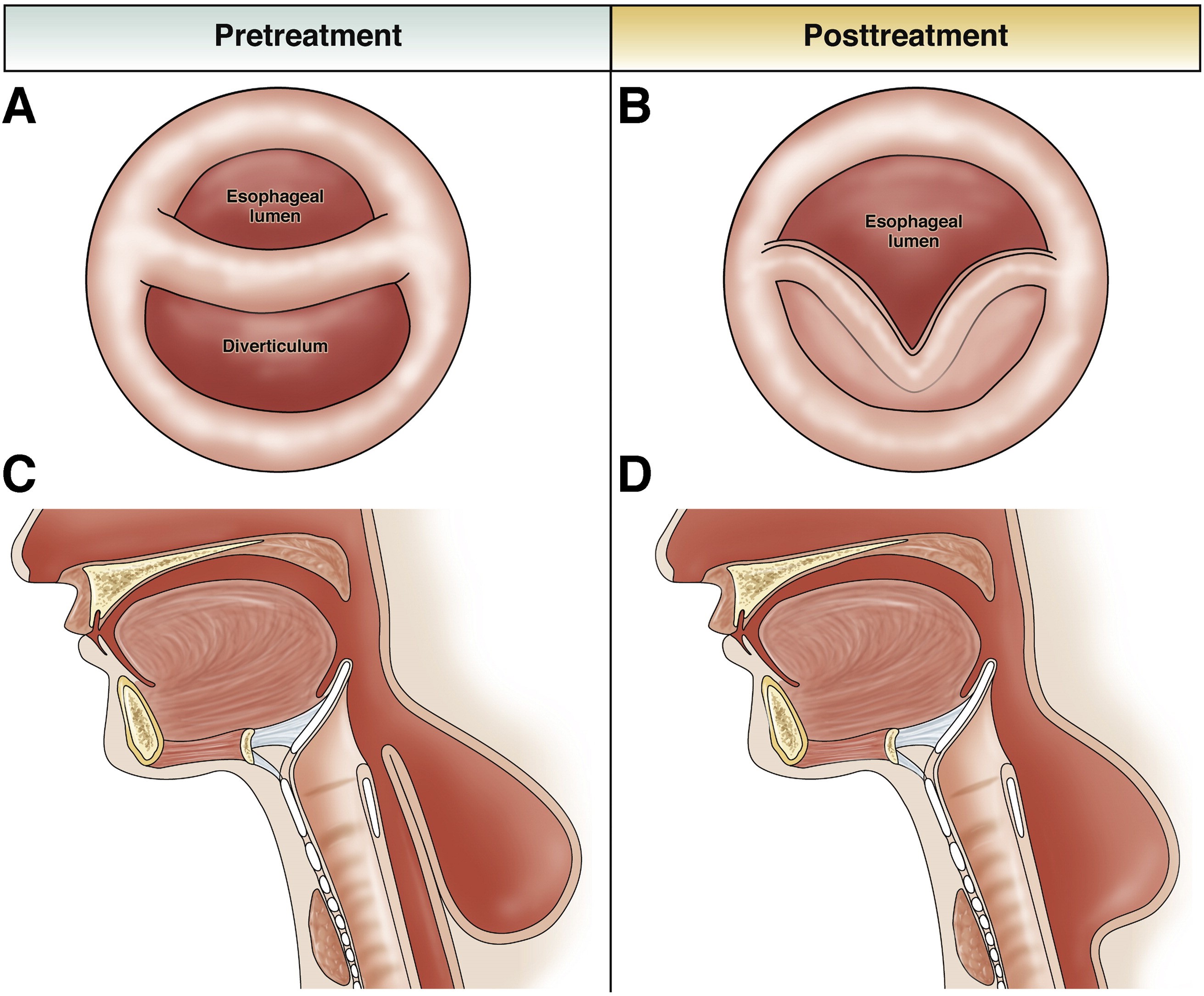
Photo Reference: Clinical Gastroenterology and Hepatology. 2014;12:1773-1782.
Z-POEM may be recommended if you:
- Have moderate to severe symptoms from Zenker’s diverticulum
- Are not responding to conservative treatments
- Want to avoid open surgery
- Are older or at higher risk for traditional surgical options
How is the Z-POEM procedure done?
- You will receive general anaesthesia.
- A flexible tube (endoscope) is passed through your mouth into your oesophagus.
- A small cut is made in the lining of the oesophagus above the pouch.
- A tunnel is created beneath the surface to reach the muscle between the pouch and the oesophagus.
- The tight muscle (the cricopharyngeal muscle) is cut (myotomy).
- The entry site is sealed with small clips, which fall off on their own after a few weeks.
What are the benefits?
- Minimally invasive: No external cuts or scars
- Relief of swallowing difficulties
- Faster recovery and shorter hospital stay
- Fewer complications compared to open surgery
- Suitable for older or higher-risk patients
What are the risks?
Z-POEM is generally safe, but like all procedures, there are some risks:
|
Risk |
Details |
||||||
|
Bleeding |
Usually mild and controlled during the procedure |
||||||
|
Perforation (tear) |
Rare; may require additional treatment |
||||||
|
Infection or mediastinitis |
Uncommon, but treated with antibiotics |
||||||
|
Air or gas-related symptoms |
Temporary bloating, neck/chest discomfort |
||||||
|
Incomplete symptom relief |
In a small number of cases |
What happens after the procedure?
- You will stay in hospital for 1 night for observation.
- You’ll start with a liquid diet, then slowly move to soft and solid foods over several days.
- You will likely have:
-
- Antibiotics to prevent infection
- Acid-reducing medications (omeprazole) for healing
-
- You’ll have a follow-up appointment to assess your recovery and check for symptom improvement.
Frequently Asked Questions
Q: Will this cure my swallowing problem?
A: Z-POEM greatly improves symptoms in most people. Some may have minor residual symptoms or need repeat procedures in rare cases.
Q: Will I have any scars?
A: No. The procedure is done entirely through the mouth.
Q: How soon can I eat and return to normal life?
A: You’ll start on liquids the day after the procedure and return to normal activities within a few days.
Q: How successful is Z-POEM?
A: Studies show success rates over 90% in improving swallowing and quality of life.
Frequently asked questions
What symptoms can Zenker’s diverticulum cause?
Difficulty swallowing, regurgitation of undigested food, coughing, choking, bad breath and recurrent chest infections can occur.
How does Z-POEM work?
A tunnel is created to divide the abnormal muscle between the oesophagus and pouch while preserving the surface lining.
Can symptoms recur?
Recurrence is possible, so persistent or returning swallowing symptoms should be reviewed.
After your procedure
Follow the written discharge instructions supplied for your procedure. Contact the clinic or seek urgent care for severe or increasing pain, heavy bleeding, fever, persistent vomiting, breathing difficulty, fainting or other concerning symptoms.
Book or refer
For appointments or referral information, visit our endoscopy referral and booking page.