
At a glance: FTRD allows full-thickness removal of selected difficult bowel lesions without conventional surgery.
FTRD is a specialised endoscopic tool used to remove abnormal tissue or early cancers from the digestive tract (usually the colon, rectum, or occasionally the stomach or small bowel) in one piece and through all layers of the bowel wall — a process called full-thickness resection.
FTRD is performed during a colonoscopy or gastroscopy using a flexible tube passed through the mouth or bottom.
Why might I need an FTRD procedure?
Your doctor may recommend FTRD if you have:
- A suspicious polyp that could not be safely removed by standard methods
- Scarred or previously attempted lesions
- Early cancers or high-risk polyps (precancerous)
- Subepithelial (beneath the surface) lesions
- Small growths in difficult locations (e.g., near folds or scars)
FTRD allows for complete removal without major surgery.
How is the procedure done?
- You will receive sedation or general anaesthetic.
- A specially modified endoscope is used with the FTRD system attached.
- The abnormal tissue is grasped and pulled into a cap, and a clip is deployed to close the bowel wall.
- The tissue is then cut out above the clip, removing all layers of the bowel wall at once.
- The clip remains in place to seal the area and prevent leakage.
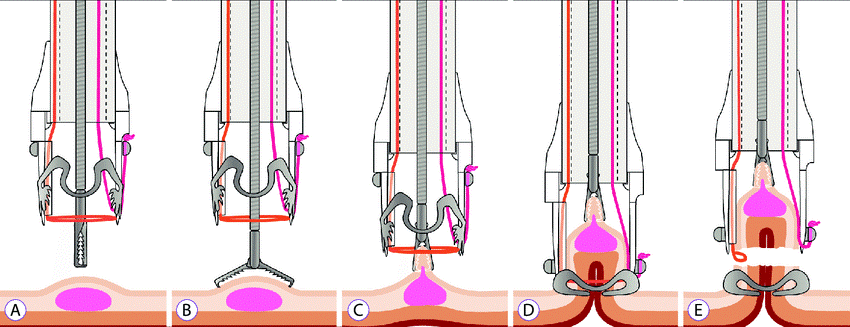
Photo Reference: Wedi et al. Clin Endosc. 2018;51:103-108.
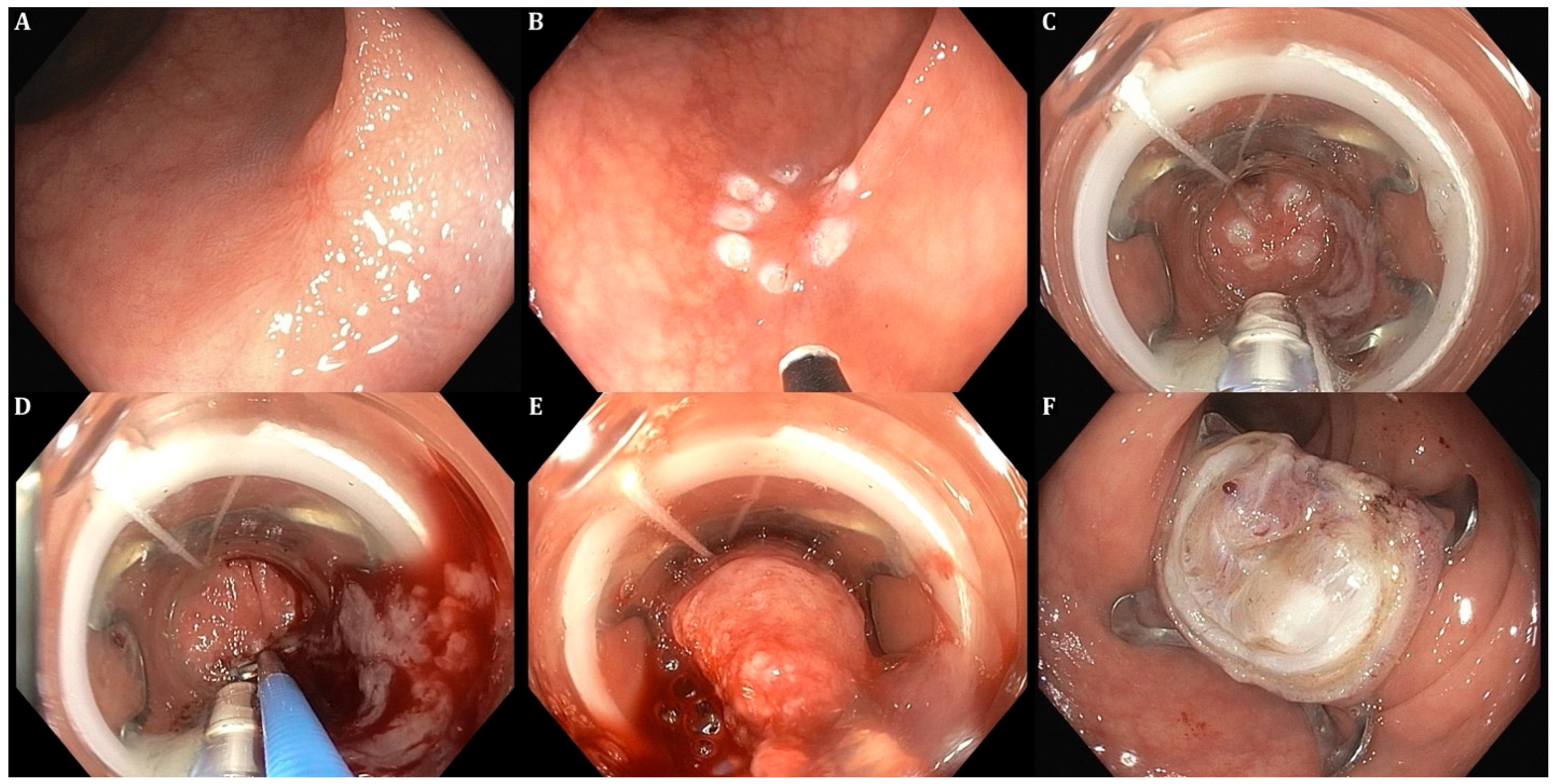
Photo Reference: Manti et al. Diagnostics. 2025. 15(7): 932.
What are the benefits?
- Minimally invasive – no cuts or external incisions
- Can remove difficult or previously untreatable lesions
- May avoid the need for bowel surgery
- Usually done as a day case or overnight stay
- Provides a full tissue sample for accurate diagnosis
What are the risks?
FTRD is generally safe, but possible risks include:
|
Risk |
Details |
|
Bleeding |
Usually mild and managed during the procedure |
|
Perforation (hole in bowel) |
Rare due to the clip, but possible |
|
Pain or cramping |
Temporary, may need mild pain relief |
|
Clip-related symptoms |
Mild discomfort or temporary bowel habit changes |
|
Incomplete removal |
Rare, but further treatment may be needed |
What happens after the procedure?
- You will be monitored in recovery.
- Most people go home the same day or after an overnight stay.
- Diet: You may be asked to follow a soft or low-residue diet for a few days.
- The clip usually falls off on its own after a few weeks and passes naturally.
- You’ll have a follow-up appointment to discuss the results and next steps.
Frequently Asked Questions
Q: Will I need surgery afterward?
A: In most cases, no. If the entire lesion is removed and no cancer is found, surgery can often be avoided.
Q: Does it hurt?
A: You shouldn’t feel anything during the procedure. Mild cramping or discomfort is possible afterward.
Q: Is the clip permanent?
A: No. The clip usually falls off by itself within weeks and passes naturally.
Q: Can I return to normal activities?
A: Most people resume normal activities within 1–2 days.
Frequently asked questions
Why use an FTRD?
It can remove selected lesions that are scarred, recurrent, difficult to lift or involve deeper layers of the bowel wall.
Is the bowel wall closed afterwards?
The device places a clip before the tissue is removed, closing the site as part of the procedure.
Will I need follow-up?
Yes. Pathology and the treatment site are reviewed to decide whether surveillance or further care is needed.
After your procedure
Follow the written discharge instructions supplied for your procedure. Contact the clinic or seek urgent care for severe or increasing pain, heavy bleeding, fever, persistent vomiting, breathing difficulty, fainting or other concerning symptoms.
Book or refer
For appointments or referral information, visit our endoscopy referral and booking page.